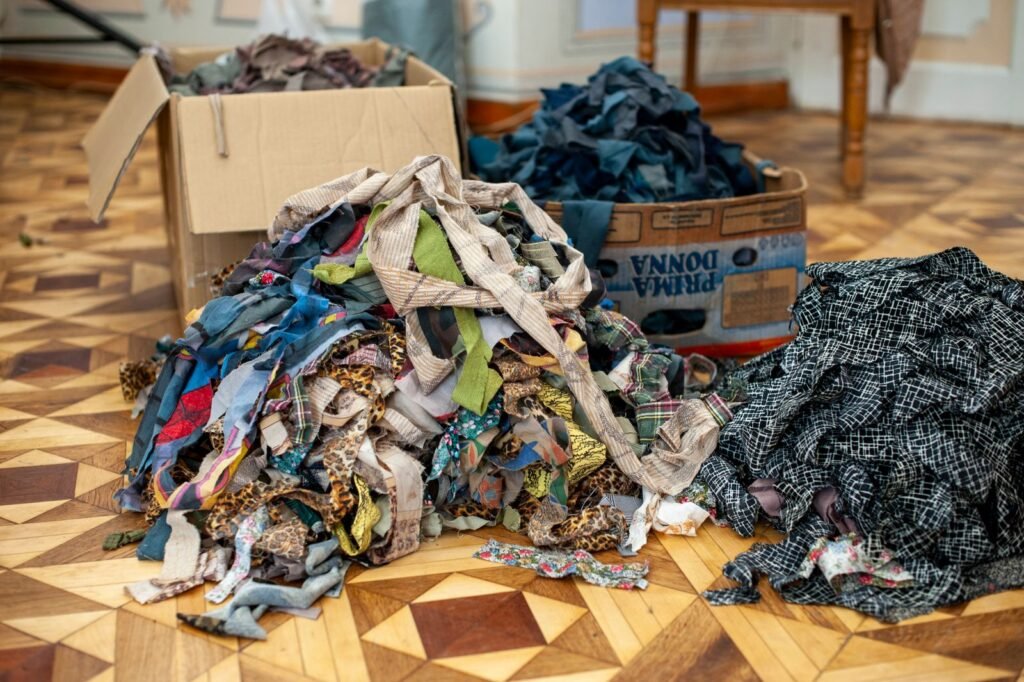
The fashion industry has talked about circularity for a decade. In 2026, the conversation has finally changed from aspiration to infrastructure: fiber-to-fiber recycling capacity is scaling, collection systems are professionalizing, and for the first time, recycled garments are being produced at price points that mainstream retailers can actually stock.
The technology caught up
The bottleneck was never intention — it was chemistry. Most clothing is a blend of fibers stitched together with mixed trims, and mechanical recycling, the traditional method, degrades fiber length until the output is only good for insulation or rags. The breakthrough wave now reaching commercial scale is chemical recycling: processes that dissolve cotton or depolymerize polyester back into their building blocks, producing fibers indistinguishable from virgin material.
Several plants using these methods have moved from pilot to industrial volume, with combined capacity measured in tens of thousands of tonnes annually. polyester-from-polyester recycling is furthest along; cotton-to-cotton cellulosic regeneration is close behind. Blended-fiber separation — the industry’s hardest problem — is in early commercial deployment.
Collection: the unglamorous half of the problem
Recycling capacity is useless without feedstock, and garment collection remains the messiest link in the chain. New policy frameworks, particularly in Europe, are funding professional sorting infrastructure with automated near-infrared scanning that identifies fiber composition in seconds — replacing what was recently hand-sorting by trained specialists.
Resale platforms have quietly become a major collection channel as well. Take-back programs tied to trade-in credits now supply recyclers with a stream of pre-sorted, consumer-verified garments, solving the contamination problem that plagues curbside donation bins.
The brands committing
The clearest signal of maturity is procurement. Major retailers are signing multi-year offtake agreements for recycled fiber — guaranteed volume commitments that de-risk recycler expansion the way power purchase agreements once seeded renewable energy. Several high-street chains have launched capsule collections with declared recycled-content percentages verified by third parties, moving beyond vague sustainability claims.
The honest gaps
Circularity advocates are careful not to oversell. Recycled fiber still represents a small fraction of global production. Elastane, ubiquitous in modern clothing, remains a separation nightmare. And collection rates in most of the world remain dismally low outside Europe.
Still, the direction is unambiguous. What was a conference keynote topic five years ago is now a line item in corporate capital budgets — and in fashion, money moves faster than promises.