Enzymatic recycling has moved from laboratory curiosity to shop floor. On 10 November 2026 Lululemon launched a limited capsule in Australia and New Zealand around two established running styles — the Hotty Hot High-Rise Lined Short and the Pace Breaker Linerless Short — whose main body fabric contains at least 50 percent polyester recovered using enzymes from Australian company Samsara Eco. It follows a 2024 anorak and is the first time the material has appeared in close-to-skin products.
Why enzymes succeed where machines stall
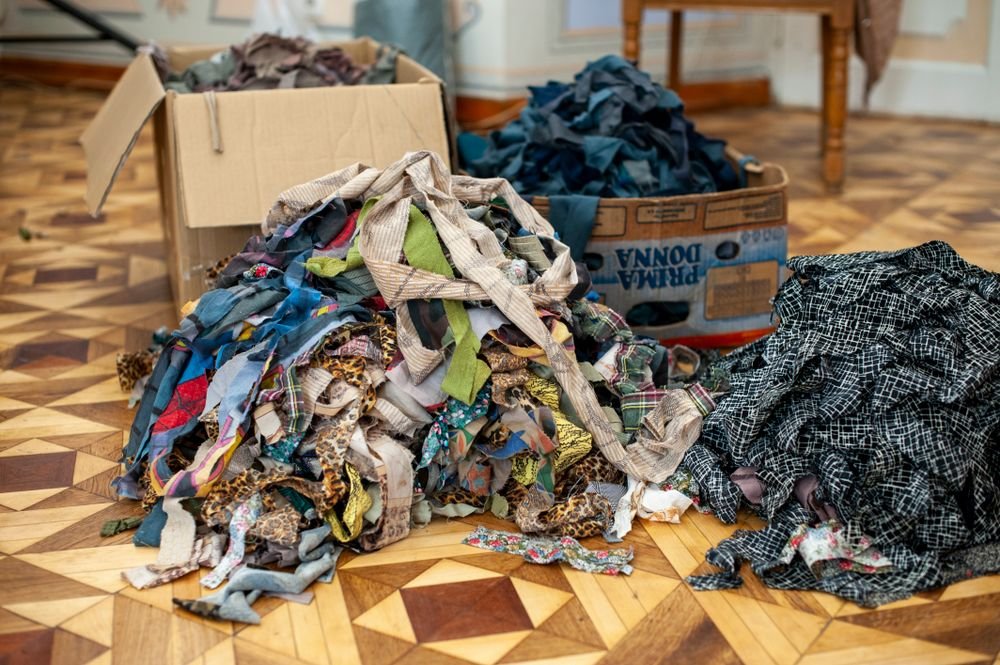
Mechanical recycling shreds and remelts polyester, and every heating cycle shortens the polymer’s chains, leaving weaker fibre downgraded into stuffing. That works on clean single-colour bottles, but a printed fleece or blended running shirt carries dyes, finishes and mixed fibres that foil it. Enzymatic recycling takes polyester apart at molecular level: engineered enzymes cut it into building blocks, terephthalic acid and ethylene glycol, which are purified and rejoined into new polyester. Colour and prior form are erased, so output can match virgin material rather than being stepped down a grade.
The science has a decade-long backstory. In 2016 a team led by Shosuke Yoshida reported that the bacterium Ideonella sakaiensis, found outside a bottle-recycling plant in Sakai, Japan, could live on PET using enzymes including PETase — but it took weeks to degrade a thin film, too slow for industry. Researchers at the University of Texas at Austin used a machine-learning model called MutCompute to design a faster version; the resulting FAST-PETase broke some samples into their building blocks in as little as 24 hours. Carbios worked from a different source, an enzyme identified in leaf compost: a 2020 Nature study reported that an engineered version broke down roughly 90 percent of prepared PET in about 10 hours.
From a reactor to retail shelves
Inside Carbios’s demonstration plant in Clermont-Ferrand, central France, shredded polyester fleece swirls in warm water in a 20-cubic-metre reactor with engineered enzymes. In textile-waste trials the company says more than 95 percent of the PET broke down within 24 hours, after which filtration recovers the ingredients. Carbios completed its 100th demonstration batch in July and widened its licensing offer to cover polyester textiles. Its proposed commercial plant at Longlaville is designed to process 50,000 tonnes of prepared PET waste a year. In September most lenders’ credit committees had approved, though financing still needed finalising — chemistry is rarely the last hurdle.
The Lululemon launch shows the other half: recovered material going into clothes people already buy. Chief materials scientist Yogendra Dandapure said the release explores how textile waste can serve as a feedstock while preserving expected performance; Samsara Eco general manager Lars Kissau called its use in two established styles an important milestone. Familiar products, rather than a labelled capsule, are a deliberate way to gather data on durability and supply-chain behaviour before a wider rollout.
The economics, and the limits of the biology
The costliest step often comes after the enzyme has finished: ethylene glycol stays dissolved in water, and separating it takes energy. A 2025 study by researchers at the US National Renewable Energy Laboratory, the University of Portsmouth and the University of Massachusetts Lowell tested fixes. Adding PET and enzymes in stages let glycol reach an economically recoverable concentration, while changes to terephthalic acid recovery cut fresh acid and base use. In their plant model this lowered the minimum selling price of recycled PET to US$1.51 a kilogram, against a five-year US average of US$1.87 for virgin PET, with nearly half the emissions of the benchmark method. Real costs still hinge on waste and energy prices and steady operation.
Policy is adding pull: the European Union has adopted minimum recycled-content requirements for categories including single-use drinks bottles, tied to a 2030 timetable, giving brands a reason to secure recycled supply. But the biology has a boundary. Enzymes cut PET because its chains contain ester bonds; polyethylene and polypropylene, used in films and caps, have tougher carbon–carbon backbones and no industrial enzymatic route. Factories need systems to sort blended, printed garments. The real test comes when those shorts wear out: whether a collection route takes them back to a recycler, closing the loop the industry keeps describing.