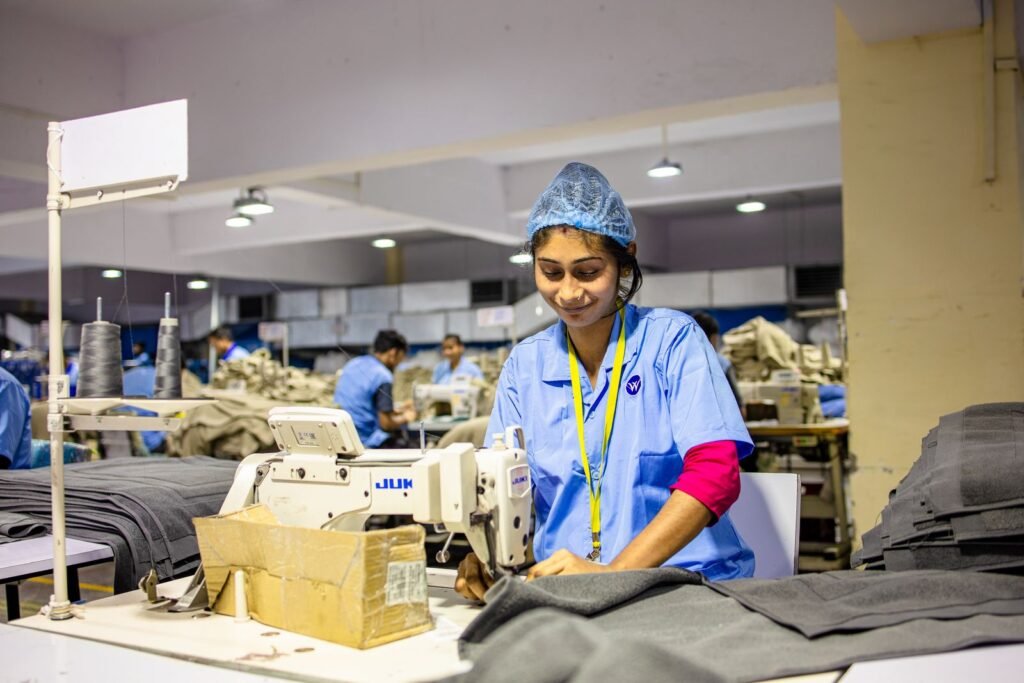
Cambodia and the European Union have launched 210 energy audits at garment, footwear and travel-goods factories, with help for suppliers financing the recommended upgrades. Officials unveiled the partnership in Phnom Penh on 19 November. The EU set the wider programme’s budget at 6 million euros ($6.5 million) in March 2024; a 2.94 million euro ($3.2 million) grant signed in June 2026 funds United Nations Industrial Development Organization audits and staff training through May 2028, according to European Commission records cited by Sourcing Journal.
Why the audit comes before the equipment
An energy audit turns utility bills into a map of where power, steam and fuel go. In a sewing plant that means looking beyond machines to boilers, compressors, ventilation, lighting and ironing stations. Some of the cheapest savings come from fixing leaks, recovering hot water or matching equipment to real demand. Mines and energy minister Keo Rottanak called efficiency a “hidden fuel”: “Some of the most valuable energy is the energy we do not need to consume.”
Scope extends beyond the site visits. Cambodia plans an online system for reporting industrial energy use and minimum energy performance standards for selected equipment, under an action plan for its National Energy Efficiency Policy. An audit is only a snapshot: without recurring data, a factory cannot tell whether savings held after the consultants left, and a buyer cannot verify the claim.
The scheme also folds working conditions into the energy conversation. Audits and follow-up support address excessive heat, poor ventilation, inadequate lighting and noise — often treated as labour issues but tied to how a building is powered and cooled. Better airflow and less waste heat can lower bills and make shifts more bearable, which is why the partnership links efficiency with productivity.
Why Cambodia’s factories are the test case
The sector is large enough that small per-factory gains add up. Cambodia’s garment, footwear and travel-goods industry covers more than 1,800 factories and branches and employs roughly 1.1 million people, most of them women, according to the labour ministry. Customs figures reported by Xinhua put exports of those goods at $14.4 billion in the first ten months of 2026, up 7.4 percent year on year. The industry accounts for roughly two-thirds of the country’s merchandise exports, so energy costs feed directly into competitiveness.
Timing raises the stakes. Cambodia is preparing to graduate from least-developed-country status, changing the trade preferences its exporters rely on. EU ambassador Igor Driesmans said a more energy-efficient base would help businesses cut costs and meet market expectations. The question for suppliers is whether lower utility bills can offset margin pressure as buyers tighten sustainability requirements. Factory-floor data is becoming part of the commercial conversation.
Financing, not physics, is the hard part
An earlier EU-backed project is a warning. Switch Garment audited 50 Cambodian garment factories between August 2021 and August 2022. By March 2025, 25 had invested a combined $3.69 million in measures including rooftop solar, according to the Global Green Growth Institute and The Energy and Resources Institute. They estimated that acting on every recommendation at all 50 sites would cost $20 million. The gap between identified projects and completed ones is where efficiency programmes stall.
Switch Garment also tried a loan guarantee fund, but ended before it was in place. An evaluation found demand was limited partly because some owners could borrow more cheaply in their home markets. The new partnership asks industry associations to turn audit findings into investment proposals lenders can assess, while working on green-finance access and the role of energy service companies.
At Chea Sinat Garment, a jeans maker in Phnom Penh, a wood-fired boiler supplied steam to 30 ironing stations. After an audit, the factory spent $1,500 returning hot water from the ironing floor to the boiler; partner Geres put payback at four months. That is the result 210 audits need to reproduce. The checkpoint is not how many reports are delivered through 2028, but how many recommendations are financed, installed and still saving energy a year later.