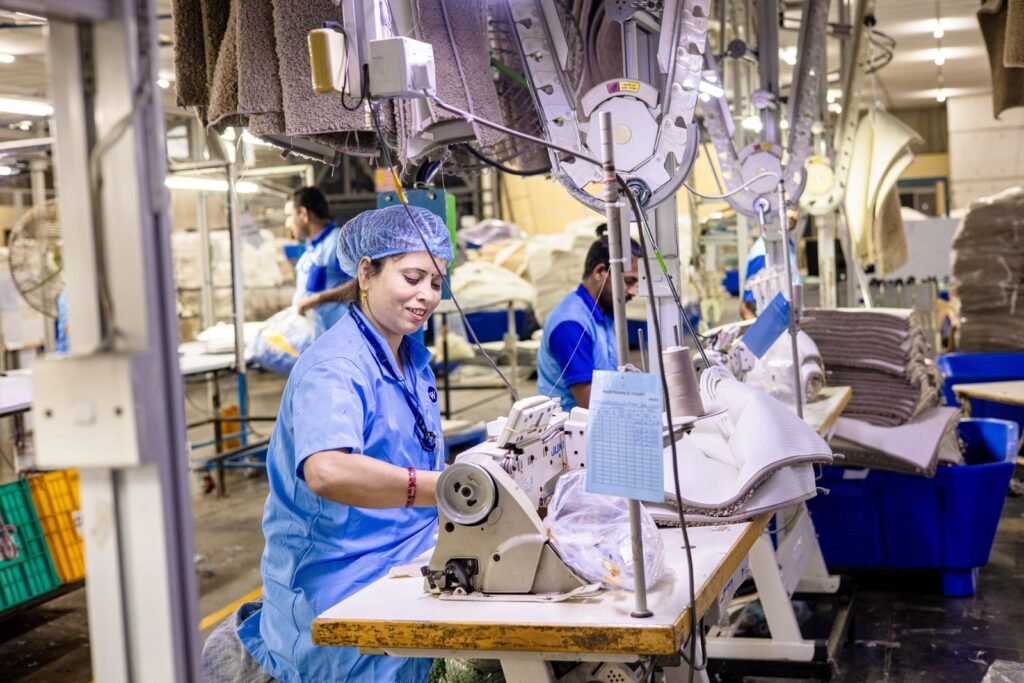
Bangladesh’s garment workers and employers remain far apart on a new minimum wage after another meeting of the government-formed committee in Dhaka on Monday. A union representative called the employers’ offer “too low” and unacceptable. The committee has agreed in principle that wages will rise in January, but the amount is still being negotiated. Workers want a 140 per cent increase, from 12,500 taka (about 88 euros) to 33,000 taka (232 euros) a month; employers have kept their counter-offer private. The standoff follows protests this month that employers say cost at least 428 million dollars.
Why 12,500 taka no longer covers a working life
The immediate driver is purchasing power. The minimum wage was last revised in December 2023, rising more than 56 per cent from 8,000 taka. Since then, inflation of roughly 8 to 9 per cent has eroded that gain. A 2025 survey by Bangladesh’s statistics bureau put average monthly urban household expenditure at 37,344 taka, nearly three times the current minimum. For workers supporting families, the statutory floor and the real cost of living are now separate figures.
The gap shows up in daily detail. Workers in the Ashulia industrial belt describe going without meat for months because a kilo of beef costs close to two days’ pay. Unions first demanded 30,000 taka, then formally proposed 32,000 to 33,000 at the wage board — a negotiated position rather than a protest slogan. Either figure exceeds the 50 to 77 per cent rises that marked earlier wage rounds.
The sector’s scale makes the outcome consequential. Bangladesh employs about four million people in some 4,000 factories and earns over 80 per cent of its foreign exchange from clothing, supplying H&M, Primark and Walmart. A wage decision here sets a reference point for sourcing costs across South Asia.
Why factory owners say a steep rise is hard to absorb
Employers say their room to move is narrow. Labour makes up roughly 10 to 13 per cent of production costs, and many factories run on margins of just 2 to 3 per cent. Energy prices, gas shortages, borrowing costs and shipping disruption have pushed logistics expenses up an estimated 5 to 7 per cent in a year. A near-doubling of the statutory wage, they argue, cannot be absorbed inside those margins.
Competition limits pass-through. An American buyer recently asked a supplier for a three-cent-per-piece cut on knitwear after Indian manufacturers quoted lower prices, according to industry executives. India’s garment minimums typically sit around 13,000 to 15,000 rupees, while pay in China and Vietnam is roughly twice the Bangladeshi level. Duty-free access to the EU, UK and Canada still helps, but India’s new free trade deal with the UK narrows that edge.
Factories also cite the disruption already caused. Industry figures put suspended production at more than 670 plants during the worst of the protests, with well over a million workers affected. One employer representative warned that a very large rise could cost jobs in smaller plants. Unions reply that export success has never translated into adequate living standards.
What the December deadline means for brands and sourcing plans
The committee must agree by the end of December, with any increase expected in January. That lands in the middle of spring collection production, the busiest shipping window. Executives say anxious customers have already called about deliveries after earlier fuel and political disruptions. For buyers, uncertainty matters as much as the number: spring quotes were largely fixed months ago, with little room to renegotiate once wages change.
The American Apparel & Footwear Association has called the wage board a critical chance to deliver a wage that supports workers and their families, and wants an annual review process instead of another multi-year gap. Predictable yearly adjustments would reduce the incentive to protest and give suppliers a firmer basis for pricing future orders.
Watch whether a specific figure is published before the deadline, whether it is phased across wage grades, and how quickly it reaches payslips. A modest raise leaves the living-cost argument open; a steep one tests whether the low-cost model can hold. Either way, the decision will be read by competitors in India and Vietnam and by brands sourcing from all three.